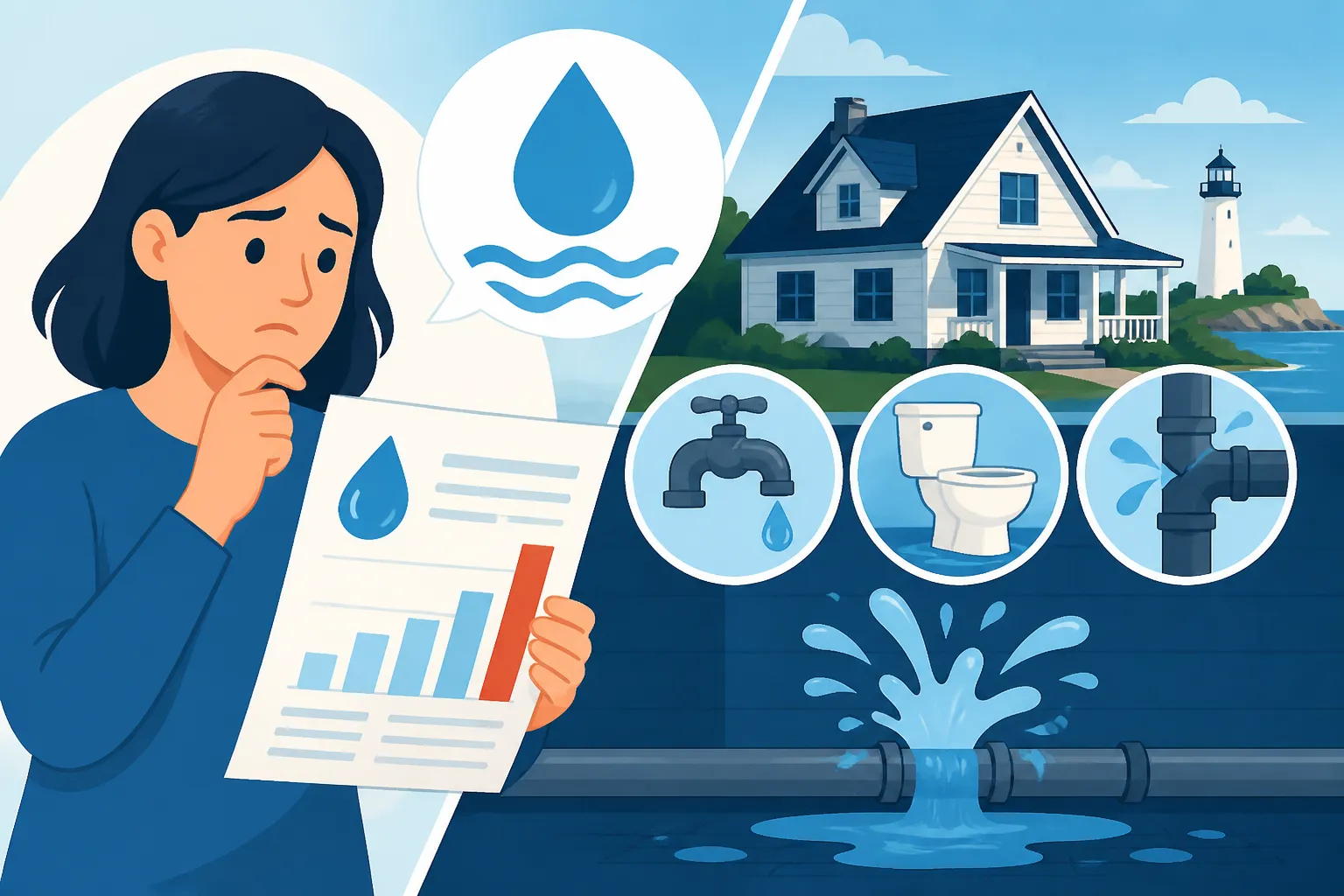
Troubleshooting a Spike in Your Portland Water Bill
A water bill that suddenly jumps can be hard to explain, especially when household routines have not changed. In Portland, the increase may reflect higher water use, a leak, a meter reading, or charges beyond water consumption. Start by comparing the bill with earlier statements, then check for leaks and ask the supplier to investigate readings or charges you cannot explain.
Start With the Bill and Identify What Changed
Before assuming there is a plumbing problem, compare the new statement with several previous bills. A single total does not show whether the increase came from more water use, a different billing period, a changed charge, or a correction to an earlier estimate.
Look for these details on the bill:
- Billing period: Check the start and end dates. A longer-than-usual period can produce a larger total even if daily use stayed about the same.
- Water use: Find the amount of water billed and the units used. Compare it with prior statements, not just with the dollar total.
- Meter reading: Look for beginning and ending readings, and note whether the reading is marked actual, estimated, or adjusted.
- Fixed charges: Some bills include charges that do not rise and fall with household use. A change in these charges can increase the total without a leak.
- Sewer charges: A sewer charge may appear on the same statement or arrive separately. Check which period it covers and how it is calculated.
- Adjustments and credits: Review any line items for prior-period corrections, service changes, or account adjustments.
- Payment history: Make sure the statement does not include an unpaid balance or other amount from an earlier period.
A useful first calculation is the average use per day. Divide the billed water volume by the number of days in the billing period. If the total volume is higher but the daily rate is similar to earlier periods, the longer billing period may explain much of the difference. If daily use rose sharply, investigate household use and meter readings.
| What changed on the bill | Possible explanation | What to check next |
|---|---|---|
| Higher water volume | Leak, more household use, outdoor use, or a reading issue | Compare meter readings and inspect fixtures |
| More billing days | A longer billing period | Compare dates and daily use |
| Similar volume, higher total | Fixed charge, sewer charge, adjustment, or balance | Review each line item and ask what changed |
| Estimated reading followed by a larger bill | A later actual reading may have reconciled earlier estimates | Ask which readings were estimated and when |
| Water and sewer amounts differ | The charges may use different methods or periods | Check the statement details and contact the billing providers |
Do not compare only the amount due. A bill can rise because of a change in water volume, a change in charges, or both. The distinction matters: a plumbing inspection may help find higher use, but it will not explain a new fixed charge or an account adjustment.
For a closer look at how fixed charges and usage charges differ, see Fixed Base Fees vs Water Usage on Maine Utility Bills. If the bill includes sewer charges, How Maine Municipalities Calculate Home Sewer Charges can help explain why the sewer portion may not track the water portion in the same way.
Compare Meter Readings and Household Use
The next step is to check whether the billed use matches the water meter and the household’s actual activity. A reading error is only one possibility, but confirming the numbers can help narrow the problem.
If the meter is accessible, compare its current reading with the most recent reading printed on the statement. Make sure you are reading the correct meter for your property and using the same units shown on the bill. Some meters display extra digits or decimals that are not billed, so do not assume every number on the display belongs in the comparison.
If the current reading is lower than the bill’s stated ending reading, note the display and contact the billing provider. There may be a difference in reading dates, display format, or account records, so ask the provider to explain before drawing a conclusion. If the current reading is higher, that does not by itself prove the bill is accurate: water may have been used since the meter was last read.
A simple record makes the conversation more useful. Write down:
- The statement’s beginning and ending readings.
- Whether each reading is listed as actual or estimated.
- The date you checked the meter.
- The current meter reading and displayed units.
- Any change in household use or plumbing work during the billing period.
Then think through water use that may have changed. Common contributors include:
- Visitors or a change in the number of people at home.
- More laundry or longer showers.
- Filling a pool, hot tub, or large container.
- Watering gardens, lawns, or new plantings.
- Cleaning, construction, or plumbing work.
- A humidifier or other appliance that uses a water connection.
- A change in work or school routines that means more time at home.
A short-term activity can affect a whole billing period, so consider the dates rather than relying on a general impression. If outdoor watering is involved, check current notices and any lease or association rules that apply to the property.
An estimated reading can make a bill harder to interpret. If one statement used an estimate and a later statement used an actual reading, the later amount may reflect use that was not fully captured earlier. Ask the supplier to identify the readings used, their dates, and whether a correction was made. Do not assume an estimated bill is wrong, but do not ignore a large adjustment you cannot reconcile.
If the meter is difficult to access, the display appears damaged, or the reading does not make sense, do not force open a locked cover or tamper with equipment. Use the supplier’s official website to find the correct contact route and ask how to arrange a meter review. For Portland Water District customers, the current account and meter guidance should come from the District’s official website.
Check for Leaks Before the Next Bill
A leak can raise water use even when no tap is running. Toilets are a frequent source of hidden household loss because a worn flapper or fill valve may let water pass continuously into the bowl without an obvious puddle.
Start with fixtures and appliances that are easy to inspect:
- Listen for a toilet that refills when no one has used it.
- Look for water moving in the toilet bowl when it should be still.
- Check under sinks and around visible supply lines for dampness or mineral marks.
- Look around the water heater, washing machine, dishwasher, refrigerator connection, and basement plumbing.
- Check outdoor spigots and irrigation equipment, if present.
- Look for wet ground or unusually lush patches near an underground line, while remembering that rain, drainage, and other sources can create similar signs.
A toilet dye check can help identify a leak between the tank and bowl. Put a few drops of food coloring in the tank without flushing. Wait long enough to see whether colored water appears in the bowl. If it does, the toilet may be leaking internally. Follow the toilet manufacturer’s guidance or arrange a repair if you are not comfortable working on it. More troubleshooting is covered in Testing Toilet Tank Flappers Using Food Coloring to Stop Leaks.
To check whether water is flowing when the household is not using it, choose a quiet period. Turn off taps and water-using appliances, and make sure no one is using water during the check. Note the meter reading, wait for a suitable interval, then read it again. Movement may indicate that water is flowing somewhere, but it does not identify the cause. Some appliances can run automatically, so account for them before treating a changing reading as evidence of a leak.
If your meter has a leak indicator, check the meter instructions or ask the supplier how to interpret it. An indicator may show low flow that is hard to see on the main display. Do not open or modify the meter equipment.
For a leak inside the home, a plumber can help locate and repair the problem. For a leak on an outside service line, ownership and repair responsibility can depend on where the leak is and the terms of the service arrangement. Ask the supplier how the property’s service line is divided and who should inspect the affected section. Avoid digging to search for a buried line; underground utilities and pipes may be present.
A meter test or leak investigation does not guarantee a bill adjustment. If a leak is found, keep the repair record, dates, and any photographs, but ask the supplier whether its current policy considers leak-related adjustments and what documentation it requires. Policies and eligibility can vary, so get the requirements directly from the provider rather than relying on a neighbor’s experience.
For more ways to narrow down a meter concern or hidden leak, see Checking Your Maine Water Meter to Detect Household Leaks and High Portland Water District Bill: New Meter or Hidden Leak?. If the issue is a dripping fixture, Can a Dripping Faucet Waste 2,700 Gallons of Household Water a Year? explains why a small, persistent leak is worth fixing.
Ask the Supplier to Review an Unexplained Increase
If the bill still does not make sense after checking use and visible plumbing, contact the billing provider. A clear, focused question is more likely to produce a useful answer than simply reporting that the bill is high.
Have the statement and your notes ready. Include:
- The account address and the billing period in question.
- The current bill’s water volume and meter readings.
- The readings and usage from earlier bills.
- Whether readings were actual, estimated, or adjusted.
- Any leak checks, repairs, or unusual water use.
- The specific line item or reading you want explained.
Ask the provider to clarify the meter-reading dates, whether any reading was estimated, and whether the account shows an adjustment or correction. If water use is unusually high, ask whether a meter test or inspection is available and whether there are any conditions or costs to consider. For a charge you do not recognize, ask which service or period it covers.
If the bill combines water and sewer amounts, first identify which provider issued each charge. The water supplier may not control the sewer calculation or billing record. Ask the entity named beside the charge to explain its method and the period covered. A sewer charge may not always match the water-use line exactly, so a difference is a reason to ask—not proof of an error.
Keep a record of the date you contacted the provider, the explanation given, and any next steps. If the provider asks for a current meter reading or photographs, follow its instructions and keep a copy. If you disagree with the response, ask what formal review or billing inquiry process is available and whether there is a deadline to request it. Confirm any deadlines and payment requirements with the provider directly.
Do not delay contacting the supplier while waiting for a plumbing repair if the bill appears to contain a meter or account issue. Likewise, a billing review does not replace fixing a leak that is still running. These are separate questions: one concerns how the bill was calculated, and the other concerns how much water is passing through the property’s plumbing.
Reduce the Chance of Another Spike
Once the immediate cause is resolved—or if no clear cause is found—keep a simple record that makes future changes easier to spot. Saving bills or downloading statements lets you compare usage, dates, and charge lines over time. A monthly note of meter readings can also help identify an unusual increase between billing periods, though it does not replace the supplier’s official reading.
A practical routine can include:
- Checking toilets and visible plumbing when a bill changes unexpectedly.
- Looking at the meter during a period when no water should be in use.
- Recording the reading and date rather than relying on memory.
- Reviewing outdoor watering and appliance use during the billed period.
- Noting when plumbing repairs or household changes occur.
- Checking each bill for estimated readings, adjustments, and changes in charges.
If the property will be vacant for an extended period, ask a qualified plumber or the supplier what precautions are appropriate for the home’s plumbing and meter setup. Do not shut off equipment or alter plumbing if you are unsure what it serves. Seasonal camps and older homes may have different plumbing arrangements, and a general checklist cannot account for every setup.
A sudden increase can also prompt a broader review of everyday water use. Fix running toilets and dripping taps, use appliances efficiently, and follow the supplier’s current notices about conservation or service interruptions. For household measures and utility notices, see Guide to Household Tap Water Conservation and Utility Directives. The goal is not to assume that every high bill comes from waste; it is to make avoidable use easier to identify and to notice when a change needs a closer look.
Frequently Asked Questions
Can a high bill happen without a visible leak?
Yes. A toilet can leak internally, an underground line can lose water without a puddle, or a bill can reflect more use, a longer period, an estimated reading adjustment, or a changed charge. Compare the usage and reading details before deciding which explanation fits.
What should I do if the meter reading does not match the bill?
Write down the current reading, date, and units displayed. Compare it with the statement’s reading and reading date, then contact the supplier through its official website. A difference may reflect timing or display format, but the provider can explain the account record.
Does finding a leak mean the supplier will reduce the bill?
Not necessarily. Adjustment policies, if available, depend on the provider’s current rules and may require specific documentation. Ask the supplier what applies before assuming a repair will change the amount due.
Why might sewer charges not match water use?
Water and sewer charges may use different billing periods or calculation methods. Check the statement to see which provider issued each charge, then ask that provider to explain how it was calculated.
Disclaimer
This article is for general informational purposes only and does not constitute professional advice. Laws, prices and regulations vary by location and change over time. Consult a qualified professional for guidance on your specific situation. Maine Water Guide is not a government agency or water utility and is not affiliated with any public water system.